Why Does Dental AR Get Out of Control?
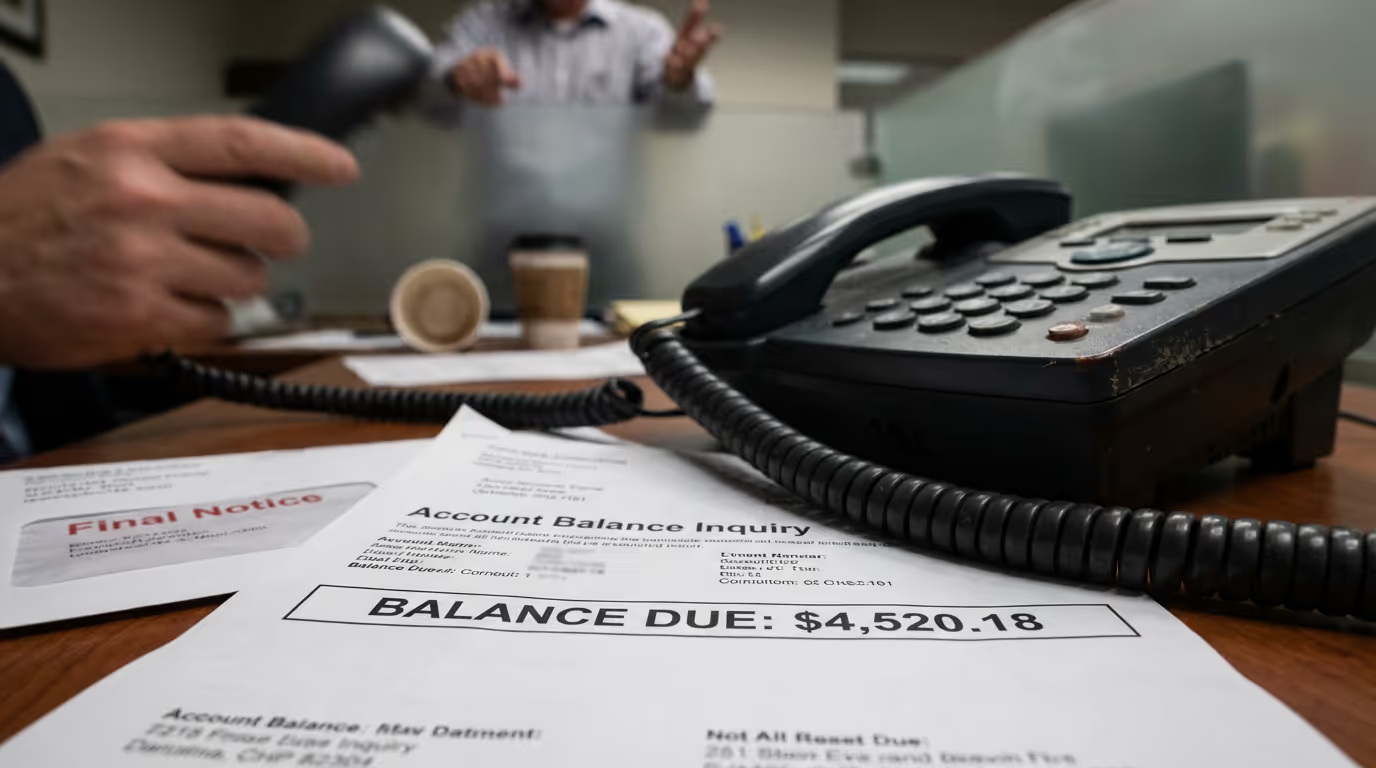
The phones started ringing as soon as we opened, but this call was different. It was a new patient, frustrated and confused about an old balance they'd only just found out about. Our office manager promised to look into it. That afternoon, she pulled up our aging A/R report in Open Dental and saw numbers that made her stomach drop. Suddenly, it was clear—accounts receivable hadn’t just crept up on us. It had gotten wildly out of control, and no one could pinpoint when or how it started.
What this problem actually looks like
Here's what I've seen: busy mornings at the front desk, three hygiene patients to check in at once, and one insurance call on hold. You toggle windows and try to work an overdue claim, but a walk-in needs med history forms. Fast forward six months, and you’re shocked to discover dozens of claims over 90 days. Some are missing x-rays, a few show incorrect eligibility, and more than a handful contain adjusted write-offs that nobody clearly remembers approving. That small hiccup with one claim multiplies into a tangled mess when multiplied by a hundred patients with differing plans.
I was once brought into an office only after a “quick audit” exposed thousands sitting past due. The old workflow depended on sticky notes for follow-up and verbal pass-offs at monthly meetings—nothing ever lived in the PMS for others to track. Denials would sit because nobody owned the task from start to finish. What felt like individual fires turned out to be one big storm building quietly week after week.
Where this usually breaks and what it costs
The breakdown almost always starts with tiny skipped steps. Maybe there’s no dedicated time to check benefit frequencies or code for the full treatment before submitting. Maybe insurance verification slides because everyone is covering someone else’s shift. When one step drops, it snowballs: missing frequencies, improper breakdowns, and delayed appeals. That increases denied claims, leads to unclear balances for patients, and creates a back wall of A/R that’s hard to scale later.
Another pattern: eligibility and benefit verification aren’t handled consistently. Even though the ADA recommends eligibility checks before every appointment, most of us have worked in offices too stretched to make it happen every time (ADA). Cutting that corner can set up weeks of rework—not just for the biller, but for everyone trying to figure out why a patient’s balance is suddenly much higher than expected.
There’s also the sheer cost in staff time and energy. Manual work piles up, and the team is constantly playing catch-up. U.S. dental practices rack up billions in admin costs each year; fully automating key processes could save the sector up to 2 billion dollars (CAQH Dental). But without good habits and system checks, even tech-heavy offices can watch A/R ratios balloon past benchmarks: what you want is below 1.0, with under 20 percent over sixty days, but plenty of offices I’ve helped are triple that before anyone flags it (Dental Economics).
What we would do this week
- Pull a current A/R aging report segmented by insurance and patient balances, then identify all accounts over sixty days. Don’t just look at numbers—drill down to see why each balance is lingering.
- Audit your insurance verification process. For every appointment this week, confirm that benefit details (like frequencies and waiting periods) are actively checked and recorded in your PMS, with documentation on file for each patient.
- Pick one workday to pause all but emergency ops and have your front desk, billing, and clinical leads walk through three recently closed claims together, step by step. Trace exactly what was sent, what came back, and what was posted—no skipping, no guessing.
Where DayDream helps
DayDream combines experienced dental billers with automation and AI to help offices stay ahead of high A/R before it becomes unmanageable. With full integration to the PMS, DayDream ensures insurance verifications are completed with full benefit breakdowns mapped to the right fields, often a full week ahead of appointments. Automated tools handle repetitive tasks like EOB posting and payer outreach, but DayDream’s billers step in to manage nuance and claim judgment. Every step, from claim submission to A/R follow-up, is visible in real time—so you always know where money is stuck and what’s being done about it.
If your A/R has you feeling underwater, you’re not alone. This problem happens slowly at first and then all at once. A little operational discipline—and the right blend of experienced people and smart automation—can make a world of difference. If you want help fixing what’s in front of you and staying ahead of it, you can book a short consult.
DayDream helps dentists put their billing on autopilot. Interested in learning more? Book a demo today.